At Pamela Hope Designs, we believe true comfort comes from thoughtful design choices that support how you live while surrounding you with beauty. Here are five ways to create elevated comfort in your home—spaces that soothe, support, and quietly delight every day.
Layer Softness—Visually and Physically
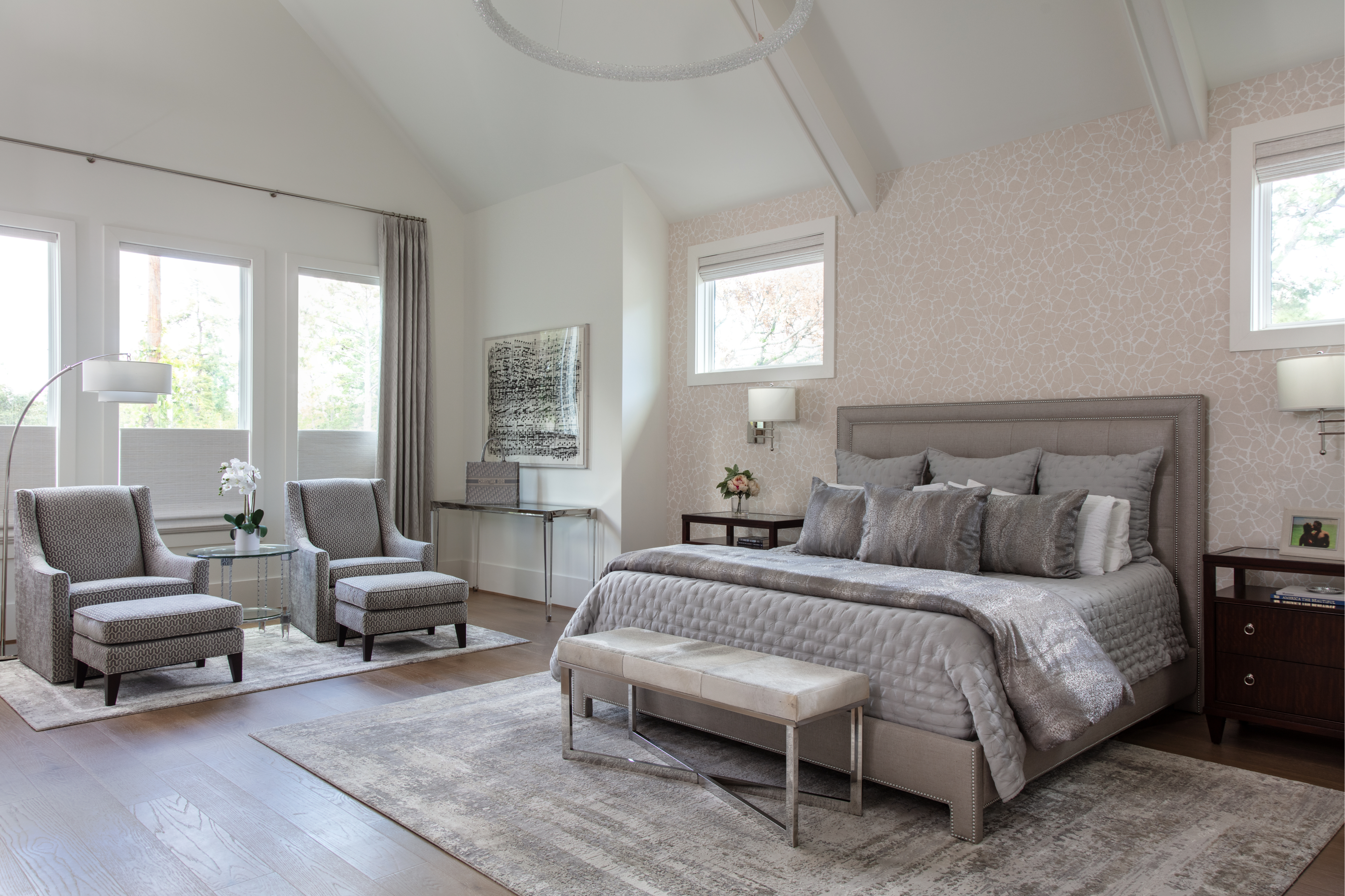
Elevated comfort starts with layers. Think beyond a single plush sofa and focus on how multiple textures work together to create depth and warmth. Quiet is an underrated luxury. Drapery, upholstered furniture, rugs, and even wallpaper help absorb sound and reduce echo, especially in open-concept or high-rise homes. A calmer space instantly feels more comfortable. Softness should be both felt and seen. Upholstered furniture with inviting silhouettes, custom drapery that frames windows gracefully, and pillows in varied sizes and materials all contribute to a room that feels finished rather than flat. A mix of linen, velvet, wool, and performance fabrics keeps things visually interesting while remaining practical.
One of our favorite designer tricks is contrast—pairing something tailored with something relaxed. A structured sofa becomes more inviting with down-filled pillows. A sleek chair feels warmer with a casually draped throw. These small gestures signal comfort without sacrificing sophistication.
Design for How You Actually Live
A beautiful home should support real life—not fight against it. Elevated comfort comes from layouts and furnishings that reflect how you use your spaces day to day. Do you host often? Seating should encourage conversation, not leave guests perched awkwardly. Do you unwind with family movie nights? Prioritize thoughtful seating because comfort starts with how you sit. Choose sofas and chairs with proper scale, supportive cushions, and quality construction. Add an accent chair or ottoman to create flexible, welcoming seating that encourages lingering. A generous sectional or deep lounge chairs may be more comfortable than formal seating that looks good but never gets used.
We always ask clients how they move through their home, where they gather naturally, and what feels frustrating about their current setup. Comfort improves dramatically when traffic flow is intuitive, surfaces are within reach, and furniture proportions suit both the room and the people using it. Good design removes obstacles—physical and visual—so you can relax without thinking about it.
Use Lighting to Set the Mood
Nothing affects comfort more quickly than lighting. A space can be beautifully furnished, but harsh or insufficient lighting will make it feel cold or uninviting. Creating warm, layered lighting elevates your comfort in the space. Use a combination of overhead lighting, table lamps, floor lamps, and sconces—ideally on dimmers—to shift effortlessly from task-oriented to cozy. Elevated comfort ideally relies on layered lighting ambient lighting for overall glow, task lighting for function, and accent lighting for warmth and atmosphere. Overhead fixtures alone rarely achieve this balance. Table lamps, floor lamps, picture lights, and even subtle cabinet lighting create pockets of softness that make rooms feel cozy and intentional.
We also recommend warm color temperatures (2700-3000 Kelvin) and dimmers whenever possible—your home should transition gracefully from day to evening. Lighting is one of the most impactful changes you can make, and often one of the easiest. When done well, it quietly enhances every other design choice in the room.
Prioritize Materials That Feel as Good as They Look
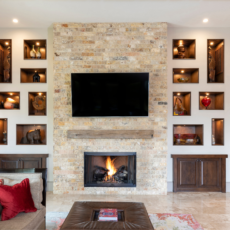
Comfort isn’t just about softness—it’s also about authenticity. Natural, tactile materials ground a space and make it feel calm and enduring. Wood with visible grain, stone with organic variation, woven fabrics, hand-finished metals—these elements add warmth and character that mass-produced finishes often lack. They also age beautifully, which contributes to a sense of ease over time. We love mixing refined pieces with slightly imperfect ones: a rustic wood table paired with tailored, upholstered seating, or a patinaed light fixture above a polished stone surface. These combinations feel collected rather than staged, comfortable rather than precious. When materials feel honest and substantial, a room naturally feels more livable.
Add Personal Details That Create Emotional Comfort
The final layer of elevated comfort is emotional. A home should reflect the people who live there—not just current trends. Personal details bring warmth and familiarity: artwork collected over time, family photographs styled thoughtfully, objects from travel, or books that invite you to linger. These are the elements that make a space feel yours. The key is editing. Too many personal items can feel cluttered, while too few can feel impersonal. We curate these moments intentionally—grouping items, varying scale, and giving each piece room to breathe—so the result feels meaningful rather than busy. When your home tells your story, comfort becomes instinctive. You don’t just like the way it looks—you feel at ease being there.
Elevated Comfort Is Thoughtful, Not Trendy.
True comfort isn’t about excess or overindulgence. It’s about thoughtful decisions that support your lifestyle, honor quality, and create spaces where you can truly exhale. When softness is layered, lighting is considered, materials are tactile, and layouts reflect real life, comfort becomes elevated—quietly luxurious and deeply personal. If your home feels almost right but not quite there, it’s often these subtle refinements that make the biggest difference. In our opinion, that’s where great design lives—in the details you feel every day.
We are off to our new design project.
Fondly,
Pamela Hope Designs
 MEET PAMELA, A LUXURY INTERIOR DESIGNER IN HOUSTON
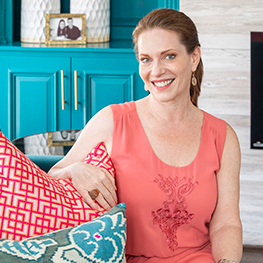
Pamela O’Brien is the founder of Pamela Hope Designs in Houston, Texas. Pamela is an award-winning luxury interior designer, writer, and speaker. Prior to founding Pamela Hope Designs, Pamela served as a spokesperson in media and public affairs, working with media outlets like Dateline NBC and 48 Hours. This experience allowed her to travel the world and furthered her love for travel, culture, and interior design. After attending an executive course at the Harvard Graduate School of Design, Pamela launched her own interior design firm full-time. Pamela is known for building strong relationships with her clients, who later become friends and collaborators. She is highly influential in the Houston interior design space and shows no signs of slowing down.